Showing posts with label aldi. Show all posts

Monday, 27 October 2014

Crémant

Not sure what it is? Well this blog is here to explain and hopefully encourage you to go out and try some for yourself.
Crémant - Classy bubbles from France
without the expensive price tag

Once upon a time in the UK we had Champagne. Well, we didn't have it as such but we imported quite a lot of it (we still do) and from the late 1800s on enjoyed it at special occasions as a drink of celebration.. The history and story of Champagne is long and you can read a huge number of books devoted to the subject if you so wish so I don't want to dwell on it too much here.

Seeing the success and popularity of Champagne winemakers in other parts of the world began to make their own versions of fizz including Cava from Spain, Sekt from Germany and more recently sparklers from Australia, New Zealand, South Africa, California in the USA, and right here at home in blighty (England to anyone not sure).

One name I have missed out of this is Prosecco from Italy. Prosecco is actually made using the 'tank method' (sometimes called Charmat method) where the secondary fermentation, that creates the bubbles, takes place in a tank rather than in the bottle. It has become very popular with supermarkets and wine merchants reporting massive double figure percentage increases in sales over the last few years.

But whilst we have all these sparkling wines from other countries, until very recently we had rarely seen another form of sparkling wine from France made in exactly the same way as Champagne but offering great value for money.

The literal translation of Crémant is 'creamy', the thought being that these wines give you a creamy mouthfeel rather than fizzy. And I think they are going to be become ever more popular, in fact I am sure of it. The rise of Crémant was first reported in the Telegraph by Henry Samuel back in 2010 but the trend continues and with Aldi and Lidl currently giving the big four supermarkets a run for their money their promotion of excellent value Crémants can only lead to a raising of the profile of such sparklers and therefore increased sales. That and this blog of course!

Crémants are available from eight
designated regions
Crémants are made using the 'traditional method' or 'Méthode Champenoise' which as the name suggests is the same as Champagne. There are eight different designated regions for production Crémants d'Alsace, de Bordeaux, de Bourgogne, de Die, du Jura, de Limoux, de Loire and added just this year de Savoie, each with it's own strict guidelines for production as is the French way.

In some regions the same grape varieties are the same as Champagne, namely Pinot Noir and Chardonnay but other varieties are also used in certain areas such as Chenin Blanc in the Loire and Pinot Blanc and Riesling in Alsace amongst others. Production is not huge particular compared with Champagne. The biggest producing region is Alsace at about 30 million bottles a year, about one tenth that of Champagne. However
Crémant d'Alsace is the most widely purchased non Champagne sparkling wine in France.

But the important point is that is really rather nice and I for one, would rather drink it than Prosecco if the budget doesn't stretch to a bottle of Champagne or English Sparkling.

Now I know many people are taking to Lidl and Aldi to do your shopping, I am too, so next time you're in Lidl pick up a bottle of  Weiber Crémant d'Alsace at just £7.99 a bottle or in Aldi Pierre Bonnet Crémant de Loire at an even bigger bargain £6.79 a bottle. I promise, you won't regret it.

Do you enjoy my wine blogs? Come and meet me in person. Visit my website www.gloryofwine.com or follow my Facebook or Twitter feeds. I would love to organise a tasting event for you.


Until next time. Enjoy your wine.
Cheers!

Simon


Tuesday, 22 July 2014

Champagne and Rosés (Part 2)

In part one of my Champagne and Rosés  blog I discussed a theoretical (unless you book one with me! hint) tasting of 8 wines with the above theme. I decided to offer 5 Champagne and sparkling wines followed by 3 rosés. In this second part I must decided on the rosé wines I would serve.

Wine 6
For me only one style comes immediately to mind as a definite and that is Provence Rosé. In recent years it has become an almost trademarked style all of its own. Usually salmon pink and delicate of flavour it makes a perfect aperitif or afternoon drink on the patio.

Rosé wine has been made in the Provence region for 2,600 years and has been influenced by the ancient Greeks, Romans, Gauls, Catalans and Savoyards.

It also uses a motley crew of diverse grape varieties in order of importance (arguably) Carignan, Cinsault, Mourvédre and Grenache. All of which, except perhaps Grenache, are not particularly well known, to the British public at least.

In total Provence has eight wine appellations with AOC designation. The largest is Côtes de Provence. According to the Vins de Provence website Provence is responsible for 6% of total domestic AOC wine production but a whopping 35% of rosé production. This corresponds to 162 million bottles some of which is exported. It is not only Britain and the United States that has had a surge in rosé drinking but even the French themselves as the chart below clearly illustrates. The percentage of rosé wine sold in supermarkets has risen from 10.8% to 29.7% since 1990. I was unable to find similar figures for the UK but the change may be even more extreme.


Bargain Provence Rosé from Aldi


So we will start with a Provence rosé. But where to buy it? Almost anywhere it seems. It can also be a bit of a bargain with this fine example from Aldi at £5.99. Even if you don't believe me Decanter World Wine Awards awarded it a Bronze so definitely not so shabby.

Majestic do a fine line in Provence rosé too, some 13 different offerings ranging from £6.66 (after discount) to £50 for a Double Magnum of the magnificent Aix Rosé. If you do get one and need myself and my wife Louise to join your party to help drink it we would be more than happy to! Just so you know.

Not quite a kick like a mule
but powerful stuff!

Wine 7
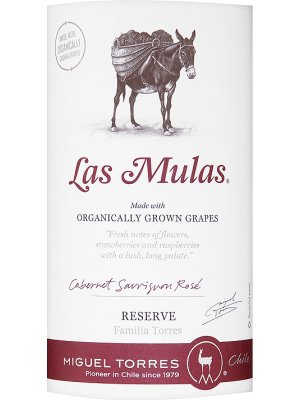
Having started with an old world classic perhaps we should look further afield for our second choice. The star grape of Chile is undoubtedly Cabernet Sauvignon, with over 40,000 hectares under vine, about one third of the total area. Most of this is made as red wine ranging in style from light, fruity everydayers to blockbusters made to knock your socks off. But they do make some rosé too. If you like delicate they may not be for you and the colour will certainly be starkly contrasting with our Provence rosé. One worth trying, and currently on offer at Waitrose is Las Mulas Organic Cabernet Rosé. It is full of dark berry flavours and has a good bit of poke too. Great on its own or with food.

Wine 8
And now to our final wine. If you are a regular reader of my blogs you will have read about this one before but I enjoyed it so much I feel I would like to include it here. Rosé wine can be made in three different ways remembering the golden rule that the colour in wine comes only from its skins meaning that rosé and red wine can only be made by the use, at some point, of red or black grapes. The first method of production is simply by leaving the skins in contact with the juice for a period of time, anything from hours to a few days and then discarding the skins. The second method, and you would of thought easiest, is simply blending white and red wines together. This does not actually produce great results and is not widely used in quality wine regions. The final method is the saignee or bleeding off method where a percentage of the wine is literally 'bled' off to be vinified separately as rosé. In some quarters this is seen as controversial but Andrew Margan of Margan wines actually calls his rosé by the method to make clear how it is produced. I wrote a whole blog on this wine recently and you can read that if you wish but I think it makes a great third wine in our trio of rosés. It is the darkest of the three and almost
Margan Saignée Rosé
tastes like a red wine but without any harsh or bitter tannins that often put rosé drinkers off trying red wines. Check it out. It is available from a favourite wine merchants of mine Tanners Wines.

This blog has only scratched the surface of what is available as rosé wine continues to become more and more popular. Please do let me know your particular favourites. That is all for now. I will return with a series of blogs about my visit to the Bordeaux region this July.

In the meantime, enjoy your wine and don't forget to follow me on Twitter and Facebook or better still book me for a tasting event. More detail at my website www.gloryofwine.com

Cheers!
Simon