Showing posts with label Chilean Wine. Show all posts

Tuesday, 22 July 2014

Champagne and Rosés (Part 2)

In part one of my Champagne and Rosés  blog I discussed a theoretical (unless you book one with me! hint) tasting of 8 wines with the above theme. I decided to offer 5 Champagne and sparkling wines followed by 3 rosés. In this second part I must decided on the rosé wines I would serve.

Wine 6
For me only one style comes immediately to mind as a definite and that is Provence Rosé. In recent years it has become an almost trademarked style all of its own. Usually salmon pink and delicate of flavour it makes a perfect aperitif or afternoon drink on the patio.

Rosé wine has been made in the Provence region for 2,600 years and has been influenced by the ancient Greeks, Romans, Gauls, Catalans and Savoyards.

It also uses a motley crew of diverse grape varieties in order of importance (arguably) Carignan, Cinsault, Mourvédre and Grenache. All of which, except perhaps Grenache, are not particularly well known, to the British public at least.

In total Provence has eight wine appellations with AOC designation. The largest is Côtes de Provence. According to the Vins de Provence website Provence is responsible for 6% of total domestic AOC wine production but a whopping 35% of rosé production. This corresponds to 162 million bottles some of which is exported. It is not only Britain and the United States that has had a surge in rosé drinking but even the French themselves as the chart below clearly illustrates. The percentage of rosé wine sold in supermarkets has risen from 10.8% to 29.7% since 1990. I was unable to find similar figures for the UK but the change may be even more extreme.


Bargain Provence Rosé from Aldi


So we will start with a Provence rosé. But where to buy it? Almost anywhere it seems. It can also be a bit of a bargain with this fine example from Aldi at £5.99. Even if you don't believe me Decanter World Wine Awards awarded it a Bronze so definitely not so shabby.

Majestic do a fine line in Provence rosé too, some 13 different offerings ranging from £6.66 (after discount) to £50 for a Double Magnum of the magnificent Aix Rosé. If you do get one and need myself and my wife Louise to join your party to help drink it we would be more than happy to! Just so you know.
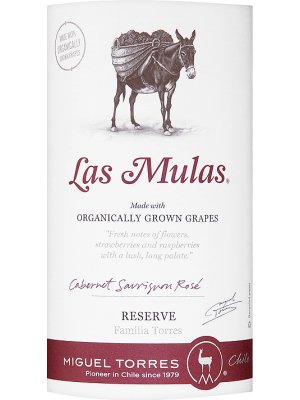
Not quite a kick like a mule
but powerful stuff!

Wine 7
Having started with an old world classic perhaps we should look further afield for our second choice. The star grape of Chile is undoubtedly Cabernet Sauvignon, with over 40,000 hectares under vine, about one third of the total area. Most of this is made as red wine ranging in style from light, fruity everydayers to blockbusters made to knock your socks off. But they do make some rosé too. If you like delicate they may not be for you and the colour will certainly be starkly contrasting with our Provence rosé. One worth trying, and currently on offer at Waitrose is Las Mulas Organic Cabernet Rosé. It is full of dark berry flavours and has a good bit of poke too. Great on its own or with food.

Wine 8
And now to our final wine. If you are a regular reader of my blogs you will have read about this one before but I enjoyed it so much I feel I would like to include it here. Rosé wine can be made in three different ways remembering the golden rule that the colour in wine comes only from its skins meaning that rosé and red wine can only be made by the use, at some point, of red or black grapes. The first method of production is simply by leaving the skins in contact with the juice for a period of time, anything from hours to a few days and then discarding the skins. The second method, and you would of thought easiest, is simply blending white and red wines together. This does not actually produce great results and is not widely used in quality wine regions. The final method is the saignee or bleeding off method where a percentage of the wine is literally 'bled' off to be vinified separately as rosé. In some quarters this is seen as controversial but Andrew Margan of Margan wines actually calls his rosé by the method to make clear how it is produced. I wrote a whole blog on this wine recently and you can read that if you wish but I think it makes a great third wine in our trio of rosés. It is the darkest of the three and almost
Margan Saignée Rosé
tastes like a red wine but without any harsh or bitter tannins that often put rosé drinkers off trying red wines. Check it out. It is available from a favourite wine merchants of mine Tanners Wines.

This blog has only scratched the surface of what is available as rosé wine continues to become more and more popular. Please do let me know your particular favourites. That is all for now. I will return with a series of blogs about my visit to the Bordeaux region this July.

In the meantime, enjoy your wine and don't forget to follow me on Twitter and Facebook or better still book me for a tasting event. More detail at my website www.gloryofwine.com

Cheers!
Simon


Tuesday, 28 May 2013

What's in a Name? - New World versus Old

Firstly some housekeeping. I flagged up at the end of my last blog that I would be writing about my local vineyard next. Unfortunately I have not yet had chance to do the tour of the place with the owners and I would like to wait until I have done that before I write about it even though I know it well. Hopefully next time.

On Day 1 at wine school the first thing you learn is about how, historically, winemakers name their wines. Well actually, that is not quite true. The first thing you learn is that white wine is not made from white grapes and red wine is not made from red grapes and that rosé is definitely not made by mixing red wine and white wine together.

What I mean is that old world wines from France, Italy and Spain most prominently name their wines based on place rather than the type of grape variety. This is why we get Rioja, Chianti and Beaujolais instead of Tempranillo, Sangiovese and Gamay. In the new world winemakers make the name of the grape variety pre-eminent so we talk about the Chardonnay of Australia, Chenin Blanc of South Africa or Pinot Noir of New Zealand.

It's not an exact science but it is a good rule of thumb. I say this because there are some new world wine areas that are increasingly synonymous with a particular style of wine. Perhaps the best example these days would be Marlborough 'Sauvignon' from New Zealand.

Australian Burgundy anyone?
In fact if we go back some 25 years plus it was common place for the new world producers to use French names on their bottles so we had Australian Burgundy or Chablis for example. Even in Europe this practice existed to a certain extent. Spanish Cava (which I have to say is a fabulous way to start an evening) was commonly called Spanish Champagne, I suspect primarily to encourage British consumers to buy when in the Costas on the early package holidays of the 1960s and 70s.

Of course this practice no longer exists due to the European Law Protected Geographical Status regulations which protects the status of many local specialties including many British ones including Melton Mowbray Pork Pies and Stilton cheese. See, Europe is not all bad.

For Australian wines the process took a little longer and only on 1st September 2010 did the practice become illegal although in reality Australian winemakers has stopped using French names when their wine became all the rage in the 1980s.

Over the last 20 years in the time that I have worked in the hospitality trade the knowledge of the general public about wine has increased about 100 fold. These days virtually anyone who drinks wine will know what grape varieties they like to drink. And they will ask for wines by grape variety. I am confident that of the many people that come in and ask for a glass of Merlot if I offered them a glass of St Emilion (leaving aside price issues and I do know that a lot of St. Emilion is blended with Cab. Franc and a little Cab. Sauv) many would say 'no thanks just the Merlot please'. And that really is a great shame because the best wine will always be French.

A classic selection of French wines - How many grape varieties can you see named?
With the massive advancement of Australian, Californian and more recently Chilean and New Zealand wines the vast majority of the public know only grape varieties and not the classic regions and I for one am very sad about that and am making it my aim to encourage people to learn more.

One of the common questions I ask my staff, and they always forget, is what grape variety is Chablis? It causes so much confusion and discussion. In fact I am too embarrassed to repeat the answer one of my staff gave to me to this question. But hey, I'll never give up trying to educate. Oh, and of course it is Chardonnay by the way.

If you enjoy what you're reading why not book a wine tasting with me. See my website at www.gloryofwine.com or follow me on twitter.

Until next time thanks for reading and enjoy your wine.

Cheers
Simon


Tuesday, 16 April 2013

My First Tasting Event

If you follow me on twitter or have read the previous blog you may know I have now started a new company offering bespoke, personal wine tastings in private homes. I realise from the outset this will be a major challenge and probably cause me a lot of frustration but no matter I am determined this is a viable business idea which I intend to make successful.

My wife Louise suggested I do a tasting event as a test run where I covered the cost of the event and invited guests to our house. We invited neighbours, who we know to say hello to, but not much more than that; the idea being that they would give me honest feedback. Also the advantage of neighbours is that they did not have to drive home afterwards. Three couples accepted our invitation and I also invited my mother and father in law who are big wine lovers. So with myself and Louise there would be 10 of us. Ideal.

The programme of wines
ISO tasting glasses were hired, a wine tasting program prepared and the wines purchased.
tasting glasses and wine tasting notes set up


At 7.30pm, once all my guests had arrived, I began the evening by thanking them all for coming and by telling them all they were guineas pigs tonight. I was quite nervous, obviously the onus was on me to keep things moving along with information and guidance but I was desperate not to come across as a wine bore. It's a fine balance that my wife and parents-in-law said afterwards I managed well. Judging the knowledge and interest of my audience is going to be a key skill if I am to make my business a success.

The first wine was a Picpoul from Felines Jourdan, purchased from Waitrose. Picpoul is one of those wines drunk heavily by the locals of Languedoc where it is produced but is not much seen in Britain. I started with it because it makes an excellent aperitif wine being crisp and dry. It was actually much darker in colour and heavier on the palate than I expected but it made a good start as everyone liked it.

Never mind the wine admire the label
The second wine was an Organic Viognier from South Australia produced by Yalumba, also from Waitrose. As you will no doubt know Viognier is one of my favourite grape varieties and this one did not disappoint. Rich and tropical with the usual palate of apricots. My audience were less keen, although they all agreed it was the nicest designed label of the evening.

Miolo Chardonnay - Disappointing
Third up was a Brazilian Chardonnay from Miolo that I have had for a number of months. I blogged about Brazilian wine previously and had high hopes but unfortunately the wine was disappointing. Rather thin, with dull flavours and little body everyone was quite happy to move rapidly on to the next wine.

Marlborough Sauv - Yummy!


The final white wine of the evening was a Marlborough Sauvignon Blanc purchased from Tanners. Pretty much all Marlborough Sauv is great despite the recent glut of it to take advantage of the demand but I can say with all honesty that Tanners only sell good and mostly great wines and this was no exception. The usual nettle and gooseberry flavours were present and for most of my guests this was their favourite of the white wines.


After we completed the four white wines I was anxiously looking at my watch worrying about the time. I thought 90 minutes for the event and we were less than 45 minutes in but I need not have worried. After a little break where we enjoyed some of the food we had provided we started on the four red wines and the time flowed along nicely.

First up was a Cono Sur Pinot Noir from Sainsbury's. I figured a lighter red was the best way to start and I always think Pinot Noir is the first wine to try if you are new to red wines. I have to say I love Chilean wines, there hardly seems to be a bad one made and this was great too. Simple yes, but delicious all the same.

Next was another Chilean wine, a Gran Reserva Merlot from Luis Felipe Edwards. The use of Reserva, Gran Reserva and the like by Chilean winemakers is a bit arbitary as they have no legal standing but it does suggest better quality and this was superb. Merlot is probably my favourite red grape as it makes such easy to drink wine and this was definitely my favourite wine of the night.

Argentinian Malbec - Bring me that steak
Batting at number three was a Malbec from Argentina. It was a full on 14% and tasted it. I warned all the guests that it was probably a food wine beforehand and so it proved. Full of dark plum fruits with overtones of dark chocolate and mocha it would be great with a sirloin steak and chips!


Wow!!
The final wine of the night was really the centrepiece of the evening. It was by far the most expensive wine of the event and I hoped it would really stand out. A famous name from a famous appellation. Purchased from Tanners the Châteauneuf-du-Pape, Télégramme, H Brunier et Fils is a classic only outranked by its bigger brother the Vieux Télégraphe. My guests immediately knew it was the most expensive wine of the night and all but one thought it the best and that says it all. Delicious plummy fruit with spice, a touch of leather and soft, ripe tannins.

The conversation flowed long after the last wine was poured and my guests enjoyed helping themselves to more of the wines they liked the most.

My final duty was to award a nice Hugh Johnson Wine Journal prize to Anita who I thought made the most interesting contributions to the evening. I was warmly thanked by all in attendance and those thanks have continued for a couple of days now. All in all a very successful event.

So now its over to you. Why not let me come to you and organise a wine tasting for you and your friends and family. Please do take a look at my website. www.gloryofwine.com and I hope you will get in touch. My packages start at £15 per person with 10 being the minimum charge (although it would work with any number from 6 up). I am based near Wolverhampton and will travel anywhere in the wider Midlands area. I look forward to hearing from you.

Next time: Tales of the old waiters friend, oh and the Stelvin Closure!

Enjoy you wine. Cheers!

Simon
Follow me on twitter

Saturday, 1 December 2012

Brazil....They Make Wine!

A couple of months ago I celebrated a fairly significant birthday milestone and was given some lovely gifts by my friends and family. One of the most interesting was a bottle of Brazilian wine. I know, Brazilian wine, who knew?

It was given to me by my friend David. Actually, David is more of a long standing friend of my wife and sister but I have also known him a long time. He works in the 'trade' as we call it, so often has access to rarities and curios when it comes to wine. I hope he won't mind me saying that not everything he has given me has been a winner. On a couple of occasions I have emptied a bottle of plonk down the sink that has turned orange from oxidisation, however most of the time they are little gems that you would rarely see in any supermarket. With that thought in mind I would like to thank him for the bottle of Cloudy Bay Sauvignon Blanc he got for me last Christmas.


Brazilian Wine......Yes, really
But Brazilian wine was something else. I didn't even know they made wine in Brazil, or if they did, that they exported it to the UK. It turns out they do, and seemingly in increasing quantities. I wasn't entirely sure what I had, something for everyday drinking or to wait for a special occasion. I'll do some research online I thought. The bottle in question was a Miolo Lote 43 Cabernet Sauvignon-Merlot from 2005. The only review I could find was very complementary so I thought a dinner with my parents-in-law, who like a fine wine, would be a good event to serve it. For those that follow me on twitter you may have seen my tweets from that day. I opened it a couple of hours before time giving a good amount of breathing time and I have to say it was delicious, an intense blackcurrant hit with a touch of spiciness to boot.

It got me thinking. I love Chilean wine and I'm beginning to like Argentinian wine (leaving aside football and Falkland Island sovereignty issues) but at some point in the past nobody in Britain really drank any South American wine. In 2010 123million litres of wine was exported to the UK from Chile. Britain imported more Chilean wine than any other nation. This may have been the high watermark as our imports reduced to 107m litres in 2011 just below the level of the United States. Even so our passion for South American wines is massive and in the last couple of years Malbec from Argentina has also become popular so why not Brazil. At present there is only 12,000 hectares of land under vine in Brazil compared with 117,000 in Chile. But I can only see that increasing and with it the amount exported to the UK which is only around 80,000 litres annually at present.

So if Brazilian wine does take off in this country over the next few years enjoy, and just remember you read about it here first. Thanks for reading.

Next Time:
Quincy. The wine, not the seventies TV show. Oh, and Menetou-Salon too.

Enjoy your wine. Cheers!
Simon

Follow me on twitter: http://twitter.com/asheshero